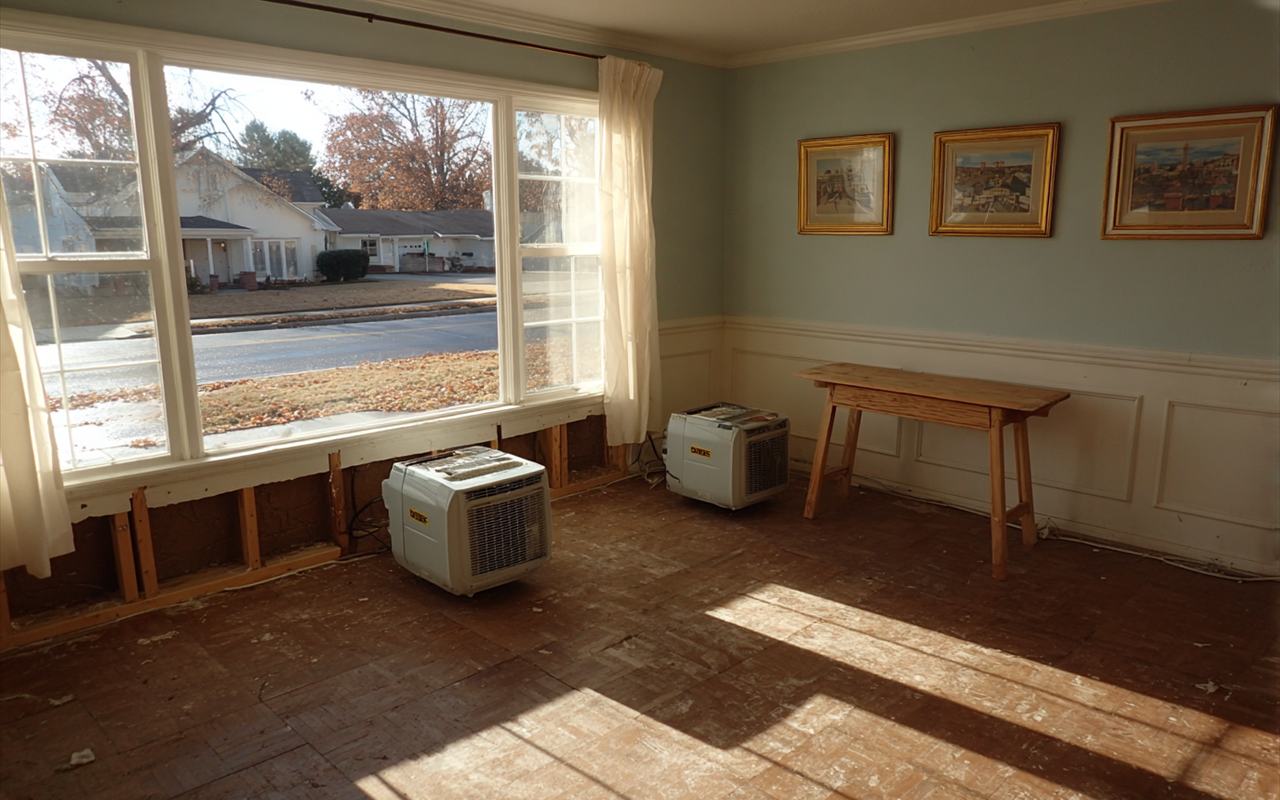
Three days after a leak, the carpet feels dry, the walls look fine and the air in the room is as dry as Idaho air usually is. And the equipment is still running. It's one of the most common questions homeowners ask during a water damage job: if it feels dry, why isn't it done? The answer is that "dry" isn't decided by feel. It's decided by numbers.
What Gets Measured
Restoration companies use a few kinds of meters, each for a different job:
| Tool | What it does | Where it's used |
|---|---|---|
| Pin meter | Two pins go into the material and measure moisture directly | Wood framing, subfloor, trim, sometimes drywall |
| Pinless meter | Reads moisture below the surface without making holes | Drywall, flooring, tile, to scan large areas fast |
| Thermo-hygrometer | Measures air temperature and humidity | The room, the crawlspace, the air coming off a dehumidifier |
| Thermal camera | Shows temperature differences that often mean wet areas | A quick look across walls and ceilings; confirmed with a meter |
Readings get taken on the first visit to map the wet area, then at the same spots on every visit after that.
What the Target Is
The goal isn't a number off a chart. It's a reading that matches the same material where it never got wet. A company takes reference readings in a dry part of the house, on the same kind of drywall, the same subfloor, the same framing, and dries the wet areas until they read the same. That's often called the dry standard. Different materials hold different amounts of moisture when they're normal, so each one gets compared with its own kind.
What you see is a fan still running. What it usually means is that one or more spots haven't reached the dry standard yet, usually inside a wall, in the subfloor or in the framing. What happens next is another check, and equipment moves or comes out as each area reaches dry.
Why Dry Air Doesn't Finish the Job
The Treasure Valley's dry air helps, but it works on surfaces. The paper face of drywall can dry quickly while the gypsum behind it stays wet. A carpet can feel dry while the pad and the subfloor under it are still holding water. Wood framing gives up moisture slowly from the inside. And in a crawlspace house during irrigation season, the subfloor may be taking on moisture from below at the same time it's drying from above. Dehumidifiers and air movers work on the parts dry air can't reach.
Reading the Log
A drying log is the record of those numbers. A good one shows:
- the date and time of each visit
- a map or list of the spots being read, with the same spot numbers each time
- the material at each spot: drywall, subfloor, stud, plate, joist
- the reading, and the dry reference for that material
- the air readings in the room and outside it
- the equipment in each area, and when it was added, moved or removed
What to look for: readings that fall from visit to visit and end near the reference. A reading that stalls points to more water than expected, a hidden source, or drying that isn't reaching that spot.
Why It Matters to You
The log does three things for a homeowner:
- It shows the job is actually finished. Walls that get closed up while the framing is still wet can cause trouble later, sometimes long after the job is over.
- It supports an insurance claim. Adjusters often ask for drying records to see what was wet and for how long.
- It helps if you sell. Being able to show that water damage was dried to a standard is useful when a buyer's inspector finds an old repair.
Ask for a copy of the log when the job ends, and keep it with your house records.
When to Question It
It's fair to ask questions if:
- the same readings come back high visit after visit with no explanation
- there's no dry reference to compare against
- walls are being closed before the framing behind them has been read
- equipment comes out but nobody can tell you why that area is done
Questions
How long should drying take?
It depends on how much water, what it soaked into and what's under the floor. The readings, not the calendar, say when it's finished.
Why did the company drill holes in my wall?
Small holes behind the baseboard let air reach inside the wall cavity, or let a meter read the framing. They're covered when the trim goes back.
Can I turn the equipment off at night?
Ask the company first. Turning it off slows the drying, and the readings may take longer to come down.
Around Meridian
Long, open main floors like those in Lochsa Falls and established homes like those in Woodbridge often need readings across a wide area. The steps behind a drying job are on restoration and mitigation.
Why Two Leaks on the Same Street Cost Different Amounts to Fix
The factors behind a water damage bill, without prices.
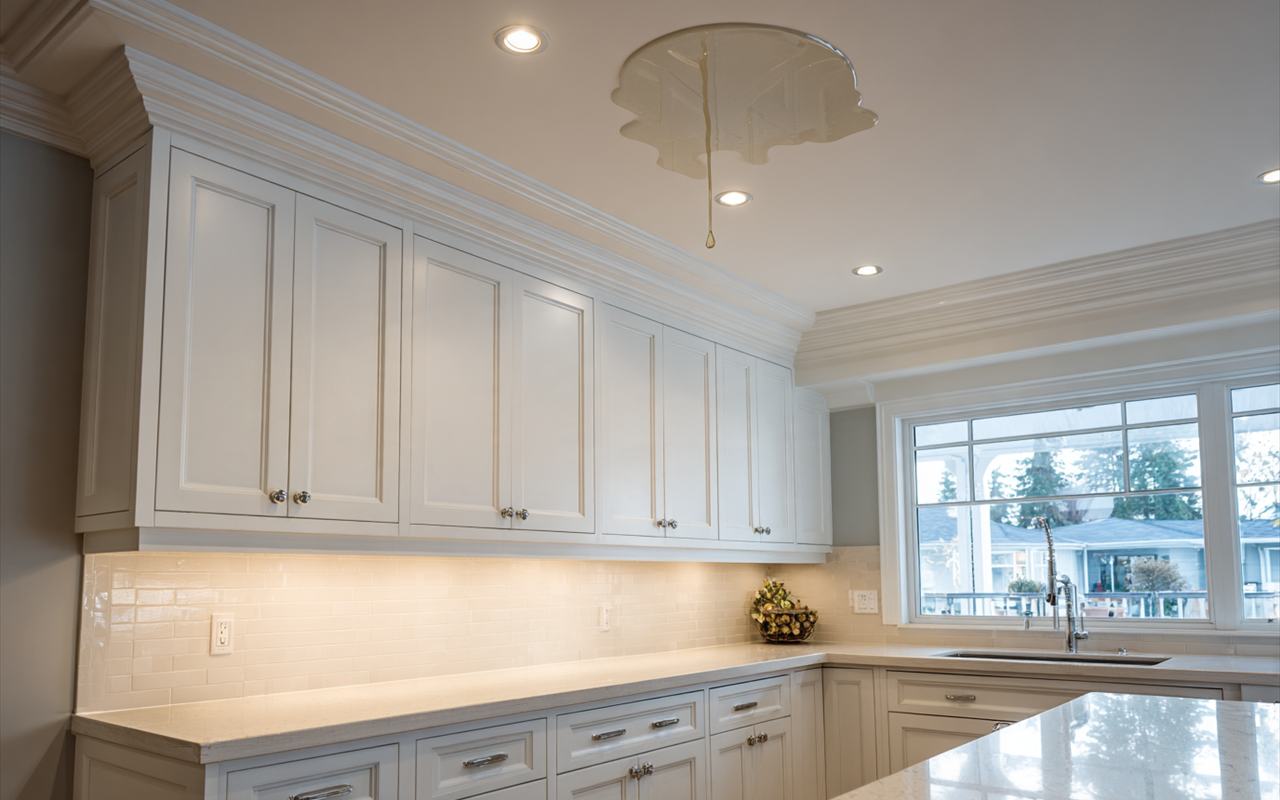
Two-Story Tract Homes: When the Upstairs Bathroom Comes Through the Kitchen Ceiling
The layout that puts water over the kitchen, and how to trace it.