Water Damage Inside Walls
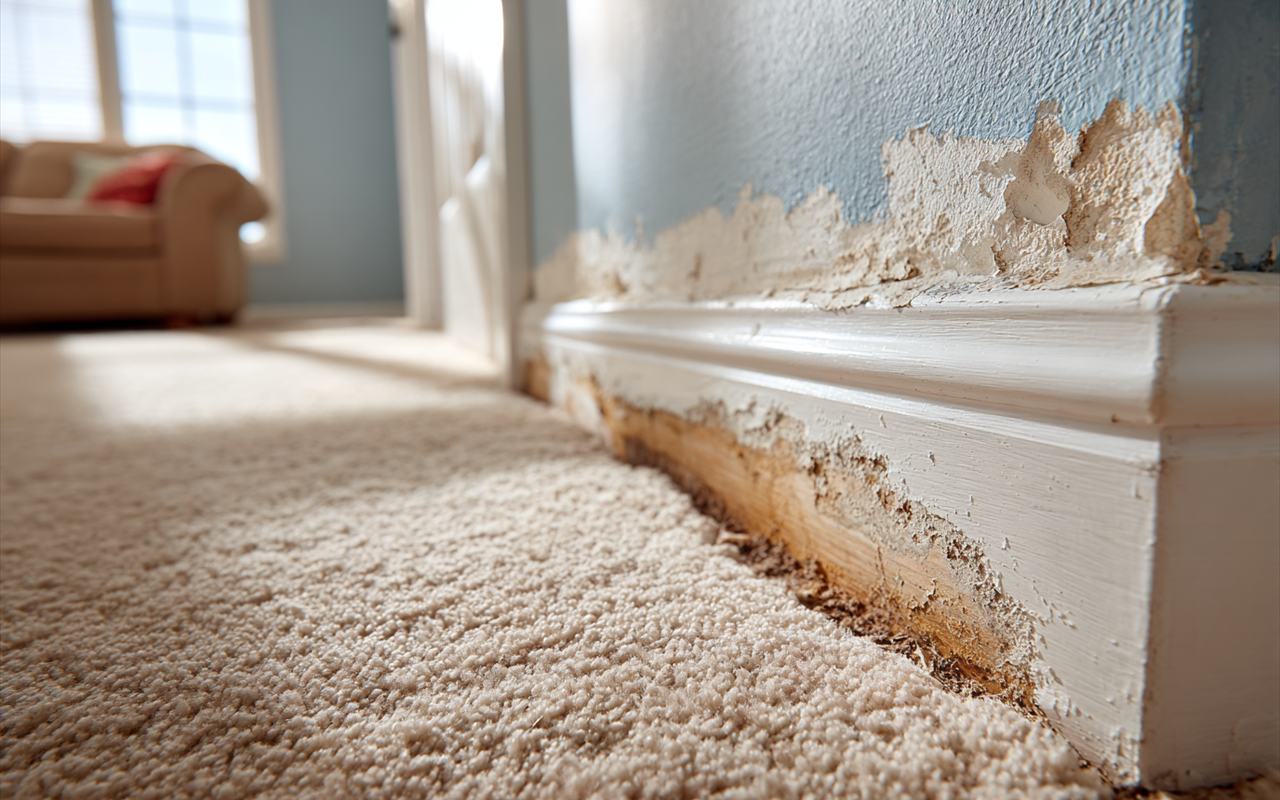
Water inside a wall is the damage people find late. A supply line behind a shower valve, a drain joint under a sink, an ice-maker line behind the fridge or a pipe in an outside wall can leak into the cavity for days or weeks before anything shows on the paint. Drywall wicks water upward and sideways, the bottom plate soaks it up, and the insulation holds it there. By the time the baseboard swells, the wet area is almost always wider than the stain.
Signs Water Is Inside the Wall
- Baseboard that's swollen, separating at the joints or pulling away from the wall
- Paint that bubbles, blisters or peels in one area
- Drywall that feels soft, cool or damp, or gives when you press it
- Flooring at the base of the wall that's damp, lifting or stained
- A smell that stays in one spot, worse when the room is closed up
- Staining that creeps up from the floor or down from the ceiling
- A water bill that rose without a reason, with nothing visibly running
What it usually means when two or three of these show up together is water in the cavity. What happens next is readings along the wall, because a meter can find the wet edges long before you'd see them.
How Wet Walls Get Opened and Dried
The goal is to dry the inside of the wall, not just its face. That usually means:
- Mapping the wet area with meters along and above the stain, and on the other side of the wall if it's an interior one.
- Removing the baseboard so the bottom of the drywall and the plate can be checked.
- A low cut, often called a flood cut, a short distance up the wall where readings say it's wet. This opens the cavity so air can reach the studs and the plate.
- Pulling wet insulation from the open section.
- Drying with air movers aimed into the cavity and dehumidifiers running in the room, checked daily against dry wall in another room.
- Closing up once the framing reads dry: new insulation, drywall, tape, texture, paint and trim.
In some cases a wall can be dried without a full cut. Small holes drilled behind the baseboard let air into the cavity. Whether that works depends on how much water, how long it sat, and whether the insulation is soaked.
Outside Walls in a Freeze
Kitchen and bathroom lines that run along an exterior wall are among the first to freeze in a Treasure Valley cold snap, especially on the north and west sides of the house. What you see after the thaw is often water at the base of the wall or coming out from under a sink cabinet. What it usually means is a split somewhere in the cavity, not always at the fixture. The drywall, insulation and the floor along that wall usually all need drying. More: frozen and burst pipe water damage.
Can Wet Drywall Be Saved?
Often, if it was clean water, the board is still firm, and it's dried quickly. Drywall that's soft, crumbling, sagging, or that soaked up water from a dirty source usually gets replaced. Board that sat wet for a long time is a replacement too, because the paper facing and the gypsum both break down. A company decides with readings and by checking how firm the board is, and it should explain what it's keeping and why.
Behind Tile, Tubs and Cabinets
Some of the hardest wet walls to deal with are the ones you can't easily get to: the wall behind a tub or shower surround, the back of a kitchen base cabinet, the wall behind a washer in a laundry closet. Water there is often found when a cabinet floor starts to swell or a tile grout line stays dark.
What happens next depends on access. Sometimes the cabinet toe-kick or back panel is removed so the wall can be reached from the front. Sometimes the wall is opened from the room on the other side. Tile walls are the hardest: if water got behind the tile, the backer and framing may need to be opened from behind or the surround removed.
Garages, Laundry Rooms and the Wall Between
In many Meridian floor plans the laundry room and the water heater share a wall with the garage. A washer hose or a heater supply line that lets go soaks that wall from the inside and the garage floor along it. Because garage drywall is often unpainted or only lightly finished, the damage can go unnoticed until it reaches the house side. Readings on both faces of the wall show how far it went.
When the Wall Gets Closed Up Again
The wall shouldn't be closed until the framing inside it reads dry. That's the step most likely to be rushed, because by then the room looks finished apart from a strip of open studs. What you see is a gap at the bottom of the wall for several days after the fans are quiet. What it usually means is the bottom plate and the studs are still giving up moisture. What happens next, once the readings match dry framing elsewhere, is new insulation where it was pulled, new drywall, tape and mud, texture matched to the rest of the wall, primer and paint, and the baseboard back on.
Texture matching matters more than people expect. Most Treasure Valley tract homes have an orange-peel or knockdown finish, and a patch that doesn't match shows in every afternoon of low sun. Ask how the texture will be matched, and whether the whole wall will be painted or just the patch.
Wet Wall Calls Around Meridian
North Meridian
South Meridian
Central Meridian
East
North
South and West
Water reached the floor as well? See floors and carpet.