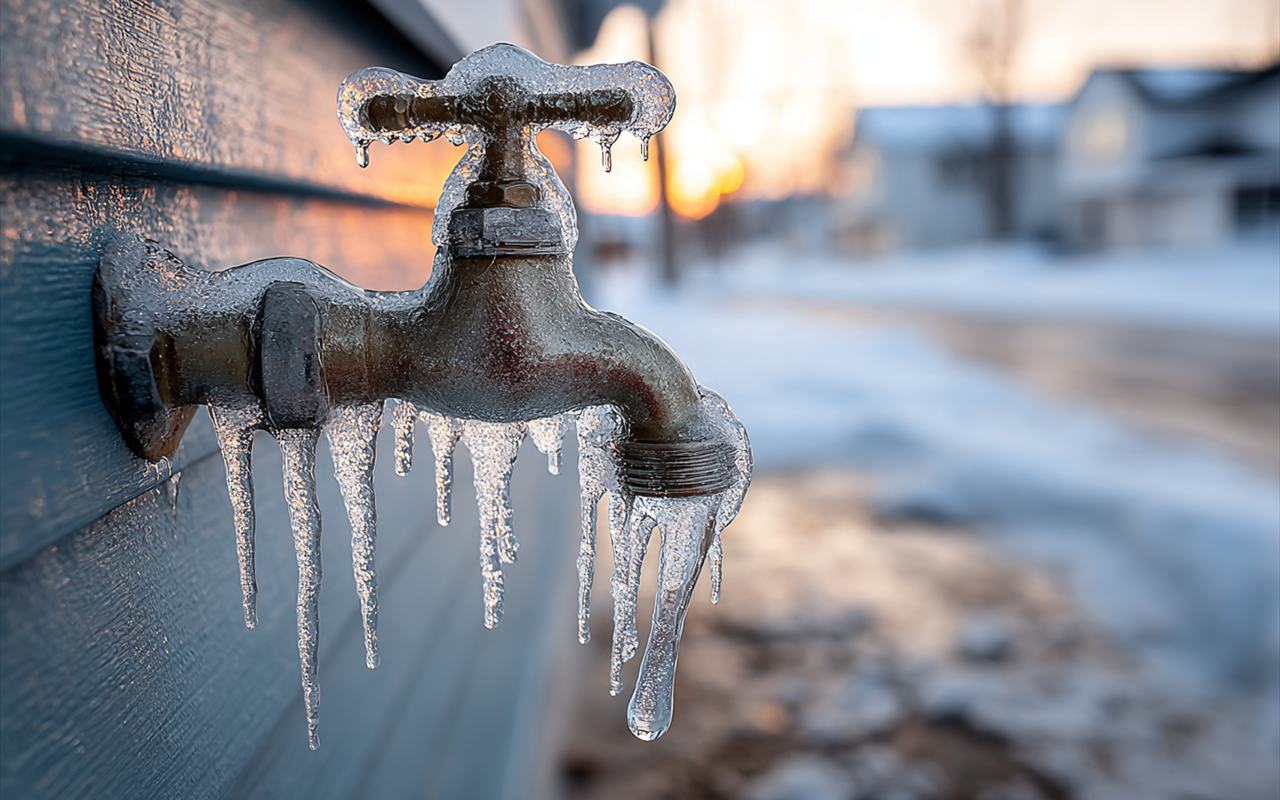
Burst Pipe Water Damage in Meridian
Treasure Valley winters bring cold snaps hard enough to freeze water lines that are exposed or poorly insulated. In early January 2017, Boise recorded lows around eleven below zero during one of the coldest stretches on record. When a line freezes, the ice expands and splits it, but the ice also plugs the split. The leak starts when it thaws, often a day or two after the cold, and often somewhere you can't see. The first job is stopping the water; the second is finding everywhere it went.
Where Lines Freeze in Treasure Valley Homes
| Spot | Why it freezes | Where the water shows |
|---|---|---|
| Crawlspace | Supply lines run through a space that can get close to outdoor temperature, especially with vents open | On the vapor barrier, in the subfloor, sometimes nowhere visible |
| Exterior walls | Kitchen and bathroom lines along north- and west-facing walls | At the base of the wall, under the sink cabinet |
| Garage | Lines to a laundry, a water heater or a bathroom above run through or along unheated garage walls and ceilings | The garage floor, the shared wall with the house |
| Attic | Lines to an upstairs bath that run close to the eaves | Through the ceiling below |
| Hose bibs | A frost-proof bib with a hose left on can split inside the wall | Inside the wall behind the bib, or the crawlspace below |
| Irrigation backflow | The backflow assembly and lines that weren't blown out before a freeze | Outside, at the foundation; sometimes into a basement or crawlspace |
The City of Meridian's seasonal water guidance warns that sprinkler pipes and backflow assemblies can freeze and break once temperatures drop below 32°F, and suggests blowing out sprinklers before the end of October.
A Pipe Burst in the House: What Gets Checked First
- The water goes off. At the main shutoff, which in many Meridian homes is in the garage, a utility closet or the crawlspace, or at the meter box near the street.
- Electrical safety. Wet outlets, wet light fixtures and anything near the panel are left alone until power to them is off.
- Every break, not just the first. A hard freeze often splits more than one line. The company checks the crawlspace, outside walls, the garage and the attic, wherever lines run.
- The wet map. Meters trace the water from each break: down the wall, under the floor, onto the insulation.
- Extraction and removal. Standing water out, soaked insulation and ruined drywall removed.
- Drying to readings, then the restoration.
The pipe repair itself is separate from the water damage work. The restoration company handles the drying and rebuilding of what the water reached.
Why the Water Shows Up at the Thaw
Water expands when it freezes. In a supply line, that pressure has to go somewhere, and it splits the pipe or pops a fitting. While it's frozen, the ice holds the water in. When the house warms, or the weather breaks, the ice melts and water runs out of the split at full line pressure.
What you see is often sudden: a ceiling that starts dripping in several places, water running out from under a cabinet, a garage floor covered overnight. What it usually means is a split that's been waiting since the coldest night. What happens next is the water off at the main, then a search for the rest.
Snowmelt and the Foundation
Winter water doesn't only come from pipes. When snow piles against the house and melts on frozen ground, the water can't soak in. It runs along the surface to the lowest point, which may be a basement window well, a door threshold or a crawlspace vent. A warm spell after a snowy week is when these calls come in. More: snowmelt and late-winter water at the foundation.
Before a Cold Snap
- find the main shutoff now, and make sure it actually closes
- disconnect garden hoses so frost-proof bibs can drain
- have the irrigation system blown out and the backflow winterized before freezing weather
- keep the garage door closed when lines run through the garage
- open sink cabinets on outside walls during the coldest nights
- if you're leaving for more than a day or two, shut the water off at the main
If a line freezes and you're not sure whether it split, leave the water off and the faucet open until it's thawed, and watch the area around it.
Coming Home to a Burst Line
Burst lines in winter often get found when someone comes home from a trip. If you walk into water, stay out of rooms where it's near outlets or fixtures, shut off the main, and photograph everything before moving it. Several days of running water usually means wet insulation in the crawlspace or attic, wet framing and wet subfloor, so expect more removal and a longer drying time than a leak caught right away.
Newer Lines, Older Lines
Most houses built around Meridian in the last couple of decades are plumbed with PEX, the flexible plastic supply line, while older homes often have copper and the oldest have galvanized steel. PEX stretches a little when water freezes inside it, so it tends to survive a freeze better than copper. It isn't freeze-proof, though. The fittings and the connections at fixtures, valves and appliances are where PEX systems usually fail in the cold, and a line pinched against cold framing can still split.
What you see in a PEX house after a cold snap is often a single failed fitting rather than a long split, typically where a line enters a wall from the crawlspace or meets a valve. What it usually means is a smaller break, but one that can still run at full pressure for hours. What happens next is the same: the water off, every wet path traced, and the drying set up from the readings.
Freeze Damage Around Meridian
North Meridian
South Meridian
Central Meridian
East
North
South and West
Water came through the ceiling? See ceiling water damage.