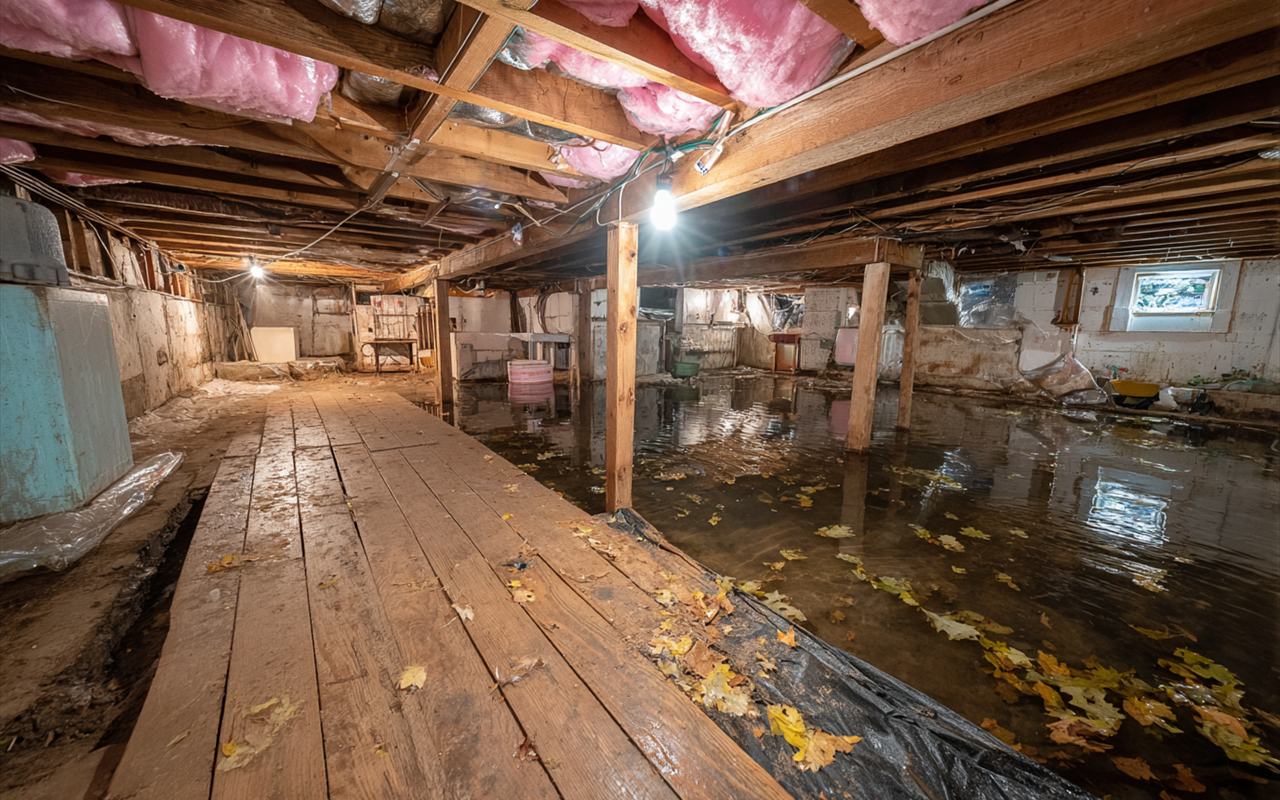
Water Under Meridian Houses
Water under a house comes from three directions: down from a leak above, in from the soil around the foundation, or up from the ground beneath. In the Treasure Valley the third one has a season. Canal seepage and irrigation recharge the groundwater all summer, and in parts of the valley the water table under neighborhoods rises with it. A crawlspace or basement that's dry in March can take on water in August. Emergency water removal, cleanup and drying under the floor work the same way whatever the source, but the source decides whether the water comes back.
Groundwater in Irrigation Season
The Treasure Valley's groundwater is fed mostly by water leaking out of the canal system, then by flood irrigation, then by rain and snow, according to the state's water-budget work on the valley. The Nampa & Meridian Irrigation District notes that blockages in canals and drains can cause flooding or raise groundwater nearby. Canals usually fill in early April and shut off in October.
What you see in a groundwater crawlspace is water that shows up in late spring or summer, sits in the low corners or across the whole barrier, and drops after the canals shut off. What it usually means is the ground is wetter than the space can handle, not a broken pipe. What happens next is extraction and drying of anything the water reached, plus a conversation about drainage that's separate from the restoration work. More: canal seepage and summer groundwater.
Background on the valley's water supply is on the Idaho Department of Water Resources site.
Crawlspace, Basement or Window Well
| Where the water is | Usual sources | What the company checks |
|---|---|---|
| Crawlspace, on the vapor barrier | Groundwater, a supply or drain line, irrigation water at the foundation | Joists, sill plate, subfloor and insulation readings; whether water is rising or dripping |
| Basement floor or carpet | A wall seep, a floor crack, a leak upstairs running down | The base of each wall, under the pad, and the framing behind finished walls |
| Basement window well | Snowmelt, rain or sprinkler water filling the well | The window frame, the wall below it and the floor in front |
If water appears in more than one, for example a window well and the crawlspace on the same side of the house, the water is likely coming from the outside soil. More on window wells: window wells and egress windows.
Emergency Water Removal and Drying Under a Floor
- A look under the house. The company goes in through the hatch with lights and a meter, notes how much water, where it's coming from and what it reached.
- Pumping and extraction. Standing water is pumped out. A soaked vapor barrier that's holding water is usually pulled.
- Insulation. Wet batts between the joists come down. They hold water against the subfloor and keep it from drying.
- Drying. Air movers and a dehumidifier go into the crawlspace itself, sometimes with the vents and hatch managed to keep the dry air in. The rooms above may get their own setup.
- Readings. Joists, sill plate and subfloor are read on each visit until they match dry wood elsewhere.
- Putting it back. A new vapor barrier and new insulation once the space is dry.
A finished basement follows the main-floor pattern instead: pad out, low cuts on wet walls, drying with readings, then rebuild.
Is a Flooded Basement in Meridian Usually Groundwater or a Pipe?
Either is common, and the timing is the best clue. Water that arrives in summer, comes up evenly or seeps in at the base of the walls, and drops after the canals shut off points to groundwater. Water that appears suddenly, in one spot, in any season, or with a jump in the water bill points to a leak. A company can usually tell on the first visit by where the water is and where the wettest readings are.
Leaks That End Up Underneath
Plenty of crawlspace water has nothing to do with the ground. A supply line under the kitchen, a drain joint under a bathroom, a water heater in a closet or a washer upstairs can all send water through the floor and onto the barrier below. Lines that run through the crawlspace are also exposed to cold, and a split in a winter cold snap can run for a long time before anyone goes under the house. See frozen and burst pipe water damage.
Pressurized Irrigation at the Foundation
Most Meridian subdivisions water their yards with pressurized irrigation run by the HOA or an irrigation entity, not by the city. Those lines and their valve boxes often sit within a few feet of the foundation. A cracked fitting or a sprinkler head aimed at the house can soak the soil against the wall all season, and the crawlspace or basement on that side shows it. If water under the house lines up with a sprinkler zone, say so on the call. Fixing the irrigation itself is separate from drying the house. Hot tub drains and pool overflows can do the same thing; see hot tubs, pools and backyard water.
Before Anyone Goes Under the House
A crawlspace is a tight, dark space with wiring, ductwork and sometimes standing water in it. It isn't a place to go wading in on your own to see how bad it is. What you can do is open the hatch, shine a flashlight in from where you are, and take a picture. That's enough to tell a company whether there's standing water, whether the insulation is hanging down and roughly how much of the space it covers.
If you smell gas, leave the hatch closed, get out of the house and call the gas utility from outside. If water is near the electrical panel or wiring, keep clear and let the company decide when power can be on. If the hatch is in a closet, clear the closet floor ahead of the visit so equipment can get in and out; drying a crawlspace usually means hoses and cords running through that hatch for several days.
Under-Floor Water Around Meridian
North Meridian
South Meridian
Central Meridian
East
North
South and West
What kind of foundation do you have? See crawlspace, slab or basement.