What a Water Mitigation Company Does
A water mitigation company's job is to stop water damage from getting worse: find where the water went, take out what's standing, remove what can't be saved, and dry the structure until moisture meters say it's done. Restoration is the second half, the drywall, flooring, trim and paint that go back afterward. Emergency water removal and water damage cleanup come first; water damage repair comes last. In a Meridian house the same company often does both. Line up the drying: (208) 908-0878.
What you see at the start is usually only part of it. A wet spot on the carpet in the family room may be the visible edge of water that ran under the pad, into the bottom plate of a wall and down through the subfloor into the crawlspace. What it usually means is that the job is bigger than the puddle. What happens next is measurement, before anything gets torn out.
Mitigation, Remediation, Restoration
These three words get used loosely, including in the ads you'll see when you search. In plain terms:
| Word | What it covers | When it happens |
|---|---|---|
| Mitigation | Stopping further damage: extraction, removing ruined materials, drying with equipment, readings | First, usually starting on the first visit |
| Remediation | Cleaning and treating what the water touched so it's safe to rebuild | During and right after drying |
| Restoration | Putting the house back: new drywall, insulation, flooring, trim, paint | After the readings say dry |
If someone hands you paperwork, look for each of these as its own line. It tells you what's being done now and what's being planned for later.
Emergency Water Removal and the First Visit
- Source and safety. The water gets shut off at the fixture or the main, and the company checks for wet outlets, wet ceilings that could drop, and anything near the electrical panel.
- Pictures and a moisture map. Before anything is moved, the company photographs each room and takes readings in the floors, walls and, in a crawlspace house, the joists and subfloor. Those readings become the map for the whole job.
- Extraction. Standing water comes up with truck-mounted or portable extractors. In a crawlspace, that often means a pump and pulling a soaked vapor barrier.
- Removal. Carpet pad that soaked through, insulation that's holding water, and drywall that's past saving come out. A low cut along a wall lets air reach the studs.
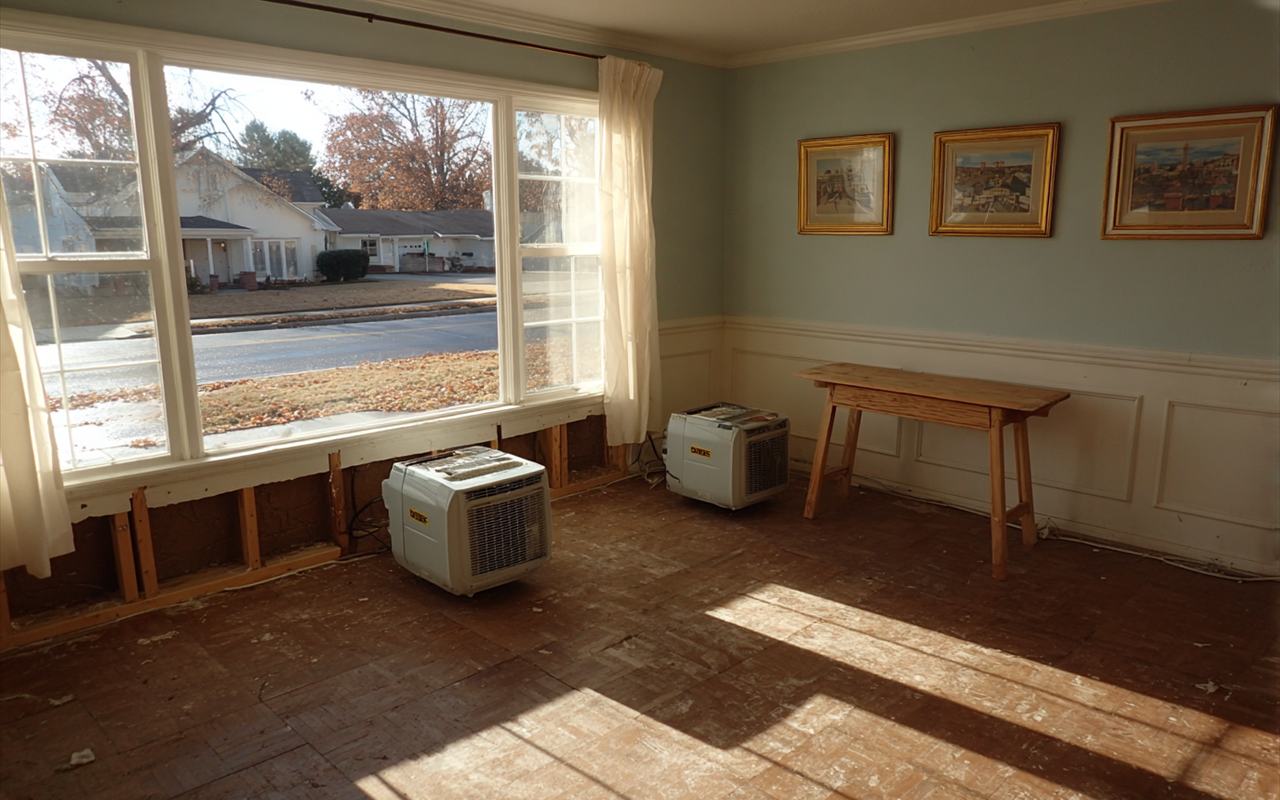
- Drying setup. Air movers and dehumidifiers go in, placed by the readings rather than by eye. Under-floor drying gets its own setup.
- Daily checks. The company comes back to read the same spots. Equipment moves or comes out as areas reach dry.
What it usually means if steps get skipped: a house that looks finished but still holds water in the framing. That's the stuff a later inspection or a sale tends to find.
Drying in Dry Air
The Treasure Valley is a semi-arid place, and a lot of people assume a wet room will dry by itself. Surfaces do dry quickly here. What's inside them often doesn't. Drywall paper can look and feel dry while the gypsum behind it is still wet, and a subfloor over a damp crawlspace can stay wet from below no matter how dry the room air is. In irrigation season the crawlspace may be feeding moisture back up the whole time.
That's why companies drive the job by readings rather than by touch or by how many days have gone by. The target is a reading that matches dry, unaffected material of the same kind elsewhere in the house. More: moisture readings and drying logs.
How Long Does Drying Take in an Idaho House?
It depends on how much water, how long it sat, what it soaked into, and what's underneath. A clean leak caught quickly on a slab floor may dry in a few days. Water that reached a crawlspace, wet the insulation and soaked into the subfloor takes longer, and summer groundwater can slow it further. The company should be able to tell you what it's measuring and what number it's waiting for; that's more useful than a day count.
When the House Is Over a Crawlspace
Water that lands on a floor over a crawlspace doesn't have to spread sideways the way it does on a slab. It goes down: through carpet and pad, through the seams of the subfloor, onto the insulation between the joists and finally onto the vapor barrier and the dirt. What you see upstairs may be a damp patch. What it usually means is wet insulation and wood underneath. What happens next is a look under the house, which is why companies here ask where the hatch is.
Insulation that's soaked usually comes out, because it holds water against the wood and stops it drying. A torn or water-logged vapor barrier may get replaced once the space is dry. More: crawlspaces and basements.
Water Damage Cleanup, Then Water Damage Repair
Between the drying and the rebuild sits the cleanup. Water damage cleanup means more than mopping: surfaces the water touched get cleaned, and anything that soaked up dirty water gets removed, which is the remediation part of the job. Clean supply-line water needs less of it; water from a toilet overflow, a backed-up drain or outside surface water needs more. Once the cleanup is done and the readings say dry, water damage repair begins: new insulation, drywall, texture and paint, flooring, trim and any cabinets that swelled. If one company does both halves, ask for the mitigation and the repair as separate parts of the paperwork so you can see each one.
The Paper Trail
Insurance or not, it helps to keep the same record a company keeps:
- photos of each room before work starts, and of anything thrown out
- the moisture readings from each visit, with dates
- a written scope: which rooms, what comes out, what drying equipment, what the restoration side covers
- any change to that scope, in writing
If you're filing a claim, your adjuster will want most of the same material. Don't sign anything that assigns your claim or its payment to someone else until you've read it through. What a bill depends on is covered in why two leaks cost different amounts.
Questions Worth Asking the Company
- Are you registered with the Idaho Contractors Board? (Idaho requires registration for most private construction work over $2,000; look it up in the state's search.)
- Can I see proof of insurance?
- What readings are you taking, and where will you write them down?
- Which parts of this are mitigation now, and which are restoration later?
- Who do I call with questions during the drying?
The state's registration search is on the Idaho Division of Occupational and Professional Licenses site.
Restoration and Mitigation Around Meridian
North Meridian
South Meridian
Central Meridian
East
North
South and West
Sorting the problem by room instead? Start at what got wet.