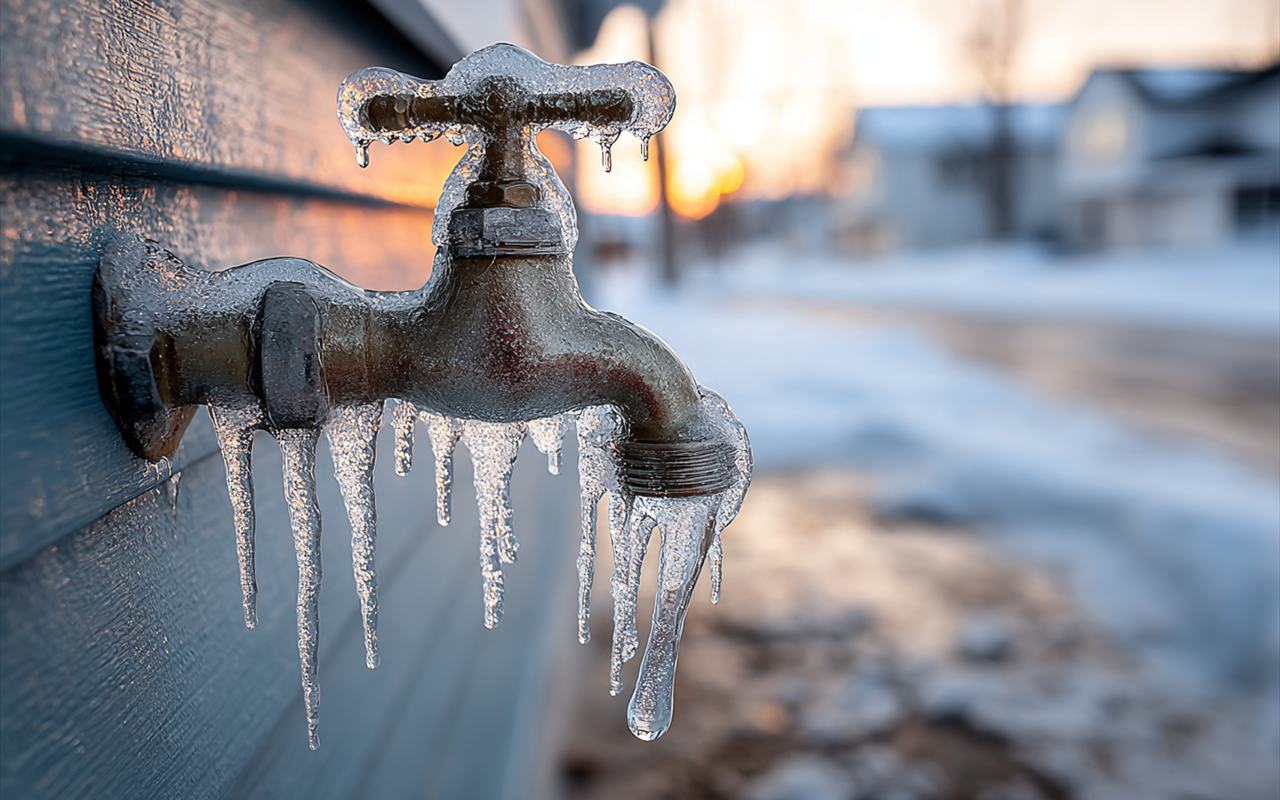
Meridian doesn't get buried in snow most winters, but it gets enough, and it gets cold enough for the ground to freeze. The trouble comes at the end of a cold stretch. A warm day, or rain falling on the snow, melts it quickly, and the meltwater has nowhere to go. Frozen ground doesn't absorb much. So the water runs across the surface to the lowest point it can find, and around a house, that's often the foundation.
Why Frozen Ground Matters
In summer, a heavy rain soaks into the yard. In late winter, the top few inches of soil can be frozen hard, and water runs off it the way it would off pavement. Snow piled against the house, from shoveling or a drift, melts right at the wall. Snow sliding off the roof lands in a band along the foundation. Gutters and downspouts may be blocked with ice, so roof melt spills over the edge and lands where the downspout was supposed to carry it away.
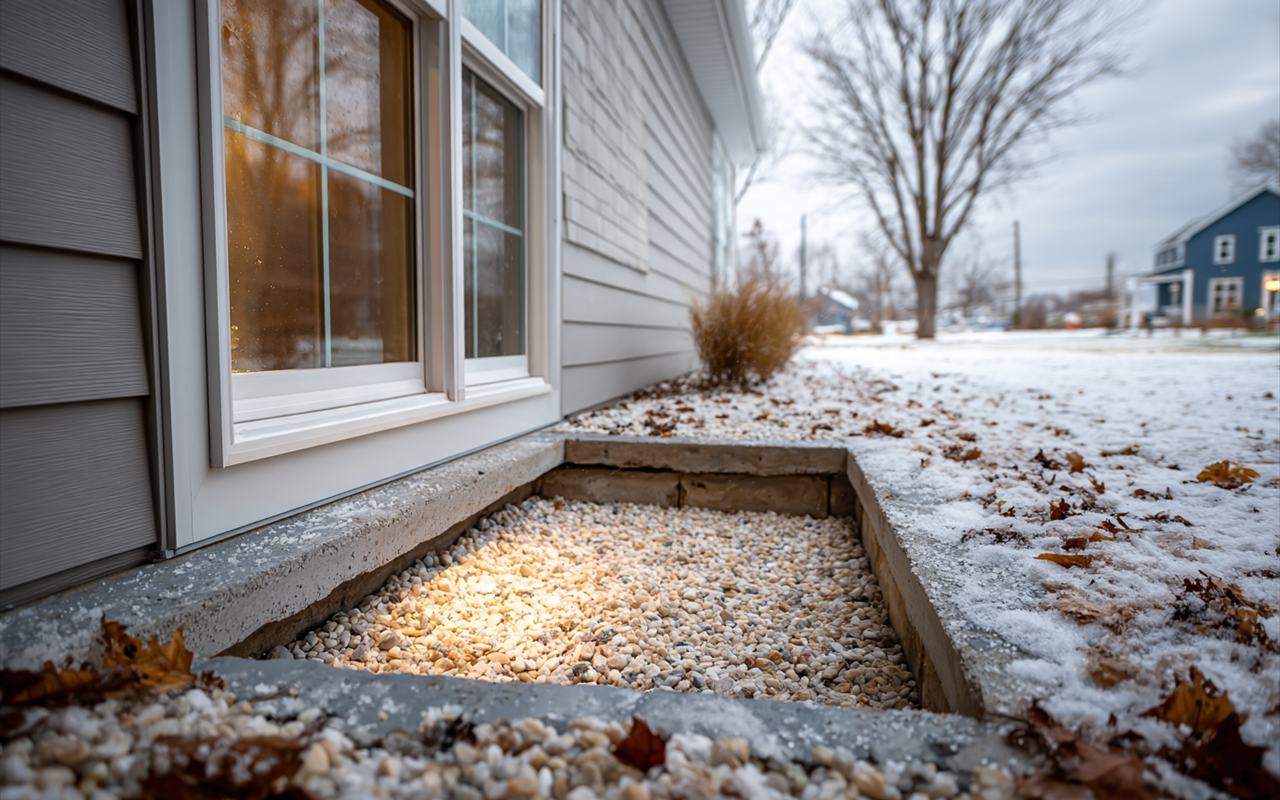
What you see: water at a basement window well, a wet spot on the crawlspace dirt near a vent, water at a door threshold, or a damp basement wall on the side where the snow piled up.
What it usually means: surface melt running toward the house and finding a way in.
What happens next: extraction and drying inside, and a look at where the water came from outside so it doesn't repeat with the next melt.
Where It Gets In
| Entry point | Why it happens in late winter |
|---|---|
| Basement window wells | The well is a low spot; melt fills it and presses against the window |
| Crawlspace vents | Vents near grade let in water running along the foundation |
| Door thresholds and sliders | Snow piled against the door melts and runs under |
| Foundation cracks | Water standing against the wall finds the gaps |
| Garage floors | Melt off cars and the driveway runs toward the house wall |
| Downspout outlets | Ice blocks the extension, so the water dumps at the foundation |
More on window wells in particular: window wells and egress windows.
The Second Late-Winter Problem: Lines That Froze
Late winter is also when frozen supply lines start leaking. A line that split during the coldest week stays plugged with ice until the house or the weather warms up. The same warm spell that melts the snow thaws the pipe. If water shows up inside during a thaw, check whether it's coming from outside or from a line before assuming either. Water at a window well or under a door points to melt; water under a sink, at the base of an outside wall or through a ceiling points to a pipe. See frozen and burst pipe water damage.
Before the Melt
You can't stop the weather, but you can steer the water:
- Shovel snow away from the walls, not against them. Leave a clear strip along the foundation where you can.
- Keep window wells clear of snow, leaves and debris, and check that well covers are in place.
- Check downspout extensions after each storm; ice and snowplows knock them loose.
- Clear the drain at the bottom of a window well if it has one, before the snow melts.
- Keep the garage door seal in good shape so melt from the driveway stays outside.
- Look at the crawlspace vents on the low side of the house; snow piled against them melts straight in.
After the Melt
Once the snow is gone, check the places it touched. Look in the crawlspace on the side where the snow piled, at the bottom of basement walls near window wells, and at the floor inside doors. Water that soaked into carpet pad or insulation won't be obvious from a glance. If you find water inside, photograph it, note the side of the house it came in on, and call. Snowmelt water picks up dirt and whatever was on the ground, so carpet and pad it soaks usually get replaced rather than dried.
Why It's Worth Tracking
Late-winter melt problems tend to repeat in the same spot, because the grading, the window well or the downspout that caused them hasn't changed. Keep a note of where and when water got in. It helps the restoration company now, and it helps whoever fixes the outside drainage later.
Questions
Is snowmelt water treated the same as a pipe leak?
Not quite. Melt running across the ground carries dirt and debris, so it's handled more like outside water, and soaked carpet and pad usually come out.
Why did water come in this year and not last year?
More snow, a faster thaw, a frozen downspout or snow piled in a new spot. Small changes outside make a big difference at the foundation.
Should I put sandbags out for snowmelt?
For most houses, moving snow away from the walls and keeping window wells and downspouts clear does more. Sandbags are for river or street flooding.
Around Meridian
Melt problems show up on newer lots in Bear Creek and Middleton, and in houses that have been through many winters, like those in Thousand Springs. Water that reached the floor is covered on floors and carpet.
Window Wells and Egress Windows in Newer Basements
Why a basement window is the low point for snowmelt and sprinklers.
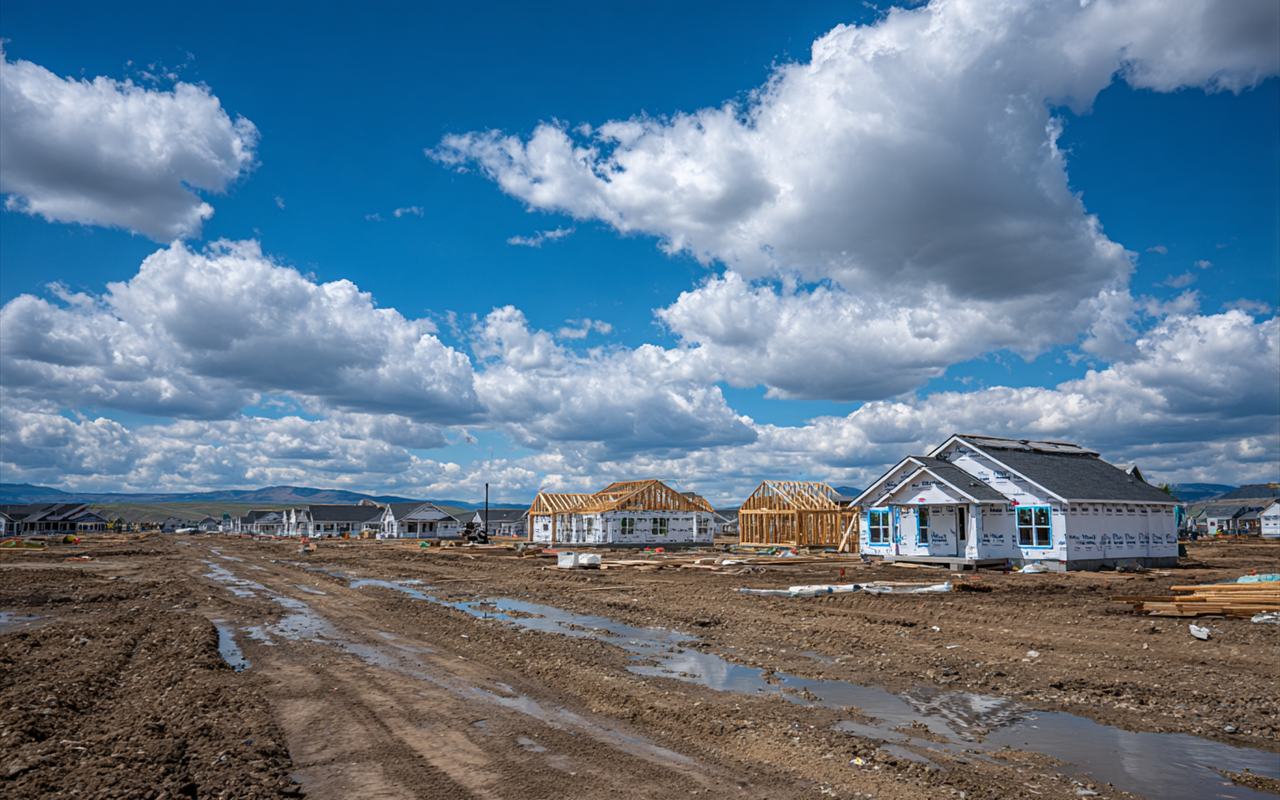
Graded Lots and New Construction: Water That Runs Toward the House
Settling backfill, missing downspouts and the first big storm.