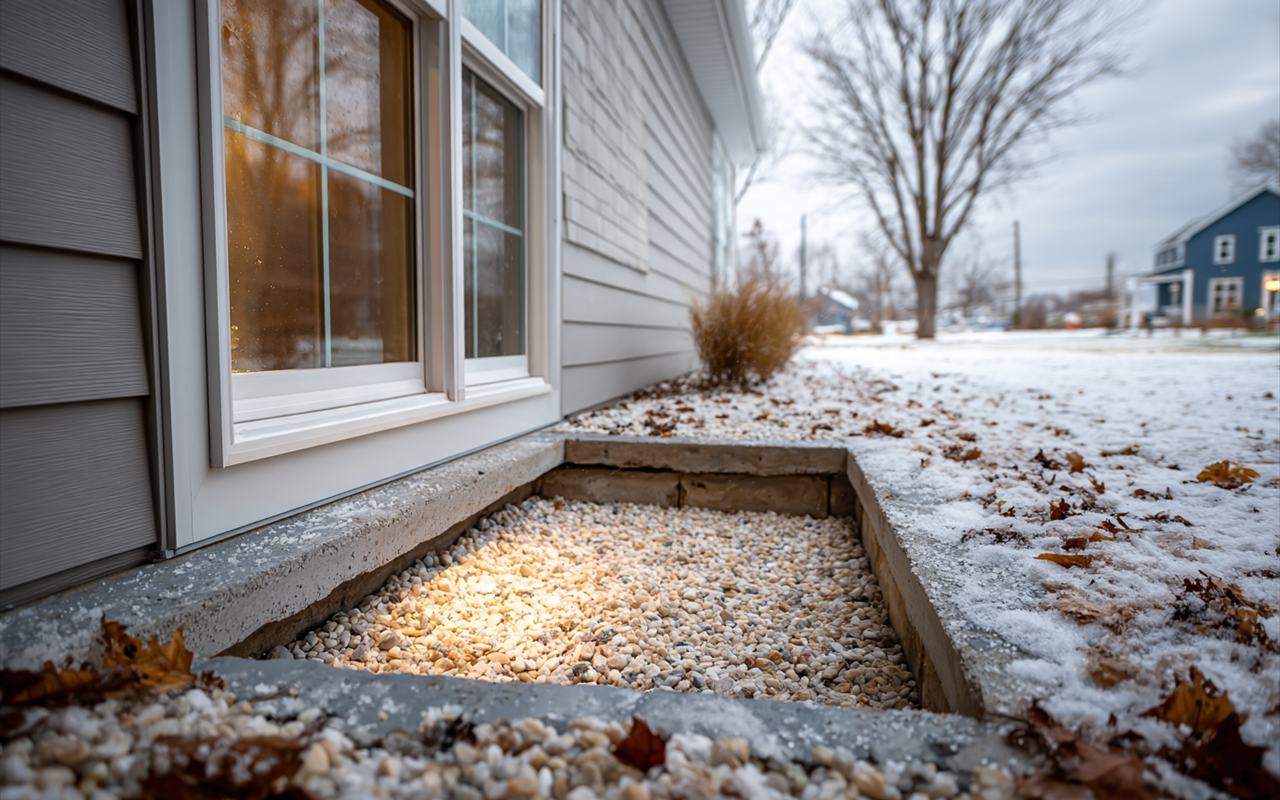
Most of Meridian's tract homes sit over crawlspaces, but basements are common in parts of Eagle, in custom and larger homes around the valley, and in older houses near Boise's core. Any basement used as a bedroom needs an egress window big enough to climb out of, and an egress window below grade needs a window well: a dug-out space lined with metal or plastic, open to the sky. That well is a hole next to the house. When water gets into it faster than it drains, it has one obvious place to go.
How a Window Well Fills
A window well collects water from three directions:
- From above: rain, snow and roof runoff, especially if a gutter overflows or a downspout empties near the well.
- From the yard: surface water running across the lawn toward the house, from snowmelt on frozen ground or a heavy storm.
- From the sprinklers: a head aimed at the house, or a zone that runs long, can fill a well a little at a time every night.
The well is supposed to drain through gravel at the bottom, sometimes into a drain line. When that gravel is clogged with dirt and leaves, or the ground below is already saturated, the water stands. Once it rises above the bottom of the window frame, it finds the gaps.
What It Looks Like Inside
What you see: water on the sill or running down the wall below the window, wet carpet at the base of that wall, a stain on the drywall under the window corners, or a puddle on the floor that keeps reappearing after rain or watering.
What it usually means: water standing in the well and getting past the window frame or the seal between the well and the foundation.
What happens next: extraction and drying inside, with readings in the wall below the window and the floor in front of it. Finished basement walls often hide water behind them, so the company may open the bottom of the wall to dry the framing.
Water coming in at a basement window?
Ceiling, wall, floor or crawlspace: (208) 908-0878.
Call (208) 908-0878Why Basements Hide It
A finished basement is the hardest place in a house to see water. Carpet pad soaks up a lot before the carpet feels wet. Drywall on a basement wall often has insulation and framing behind it, sitting against concrete that's already cool and damp. Water that comes in at a window can run down inside the wall and across the slab under the carpet without showing at all, until there's a smell or a stain.
| Part of a finished basement | What water does there | What usually happens to it |
|---|---|---|
| Carpet and pad | Soaks the pad first, then spreads | Pad replaced; carpet sometimes saved if the water was clean and quick |
| Drywall under the window | Wicks upward from the bottom | Low cut and drying if the readings show it's wet inside |
| Insulation behind the wall | Holds water against the concrete and framing | Usually removed where wet |
| Bottom plate | Sits on the slab and soaks up water | Dried to readings |
| Window trim and sill | Swells and stains | Often replaced in the restoration |
Keeping Wells Draining
- Clean the well in spring and fall: pull leaves and dirt off the gravel so it can drain.
- Check for a drain. Some wells have a drain line at the bottom; make sure it isn't buried or blocked.
- Fit a cover that sheds water and snow but still opens from inside for escape.
- Keep downspouts away from window wells, and extend them past the well.
- Aim sprinkler heads away from wells, and watch them run once each season.
- Look at the seal where the well liner meets the foundation; gaps let water run down the outside of the wall.
After Water Comes In
- If water is still coming in, bail or pump the well down if you can do it safely, and stop the sprinklers.
- Move belongings off the wet carpet and away from the wall.
- Photograph the well, the window and the room before anything moves.
- Call. Water behind a finished wall and under pad dries slowly and doesn't show its edges.
Any work on the well, the drainage or the window itself is separate from the restoration work inside.
Questions
Why did the window leak this time and not before?
The well likely held more water than usual: a clogged drain, more snowmelt, a sprinkler change or a downspout that came loose. Wells that drained fine for years can slowly fill with debris.
Can a window well cover keep water out completely?
It keeps out most rain and snow and all the leaves. It won't stop water coming through the soil from the yard, so drainage and grading still matter.
Is window well water clean?
It's outside water that's run through soil and gravel, so it's treated as dirty. Carpet and pad it soaks usually come out.
Around Meridian
Basements with egress windows are common in the custom homes around Eagle and in older homes in Boise. Under-floor and basement drying is covered on crawlspaces and basements.
Snowmelt and Rain on Frozen Ground: Late-Winter Water at the Foundation
The warm spell after a snowy week, and where the melt goes.
Crawlspace, Slab or Basement: A Treasure Valley House-Type Guide
What your house is sitting on, and where water goes in each.