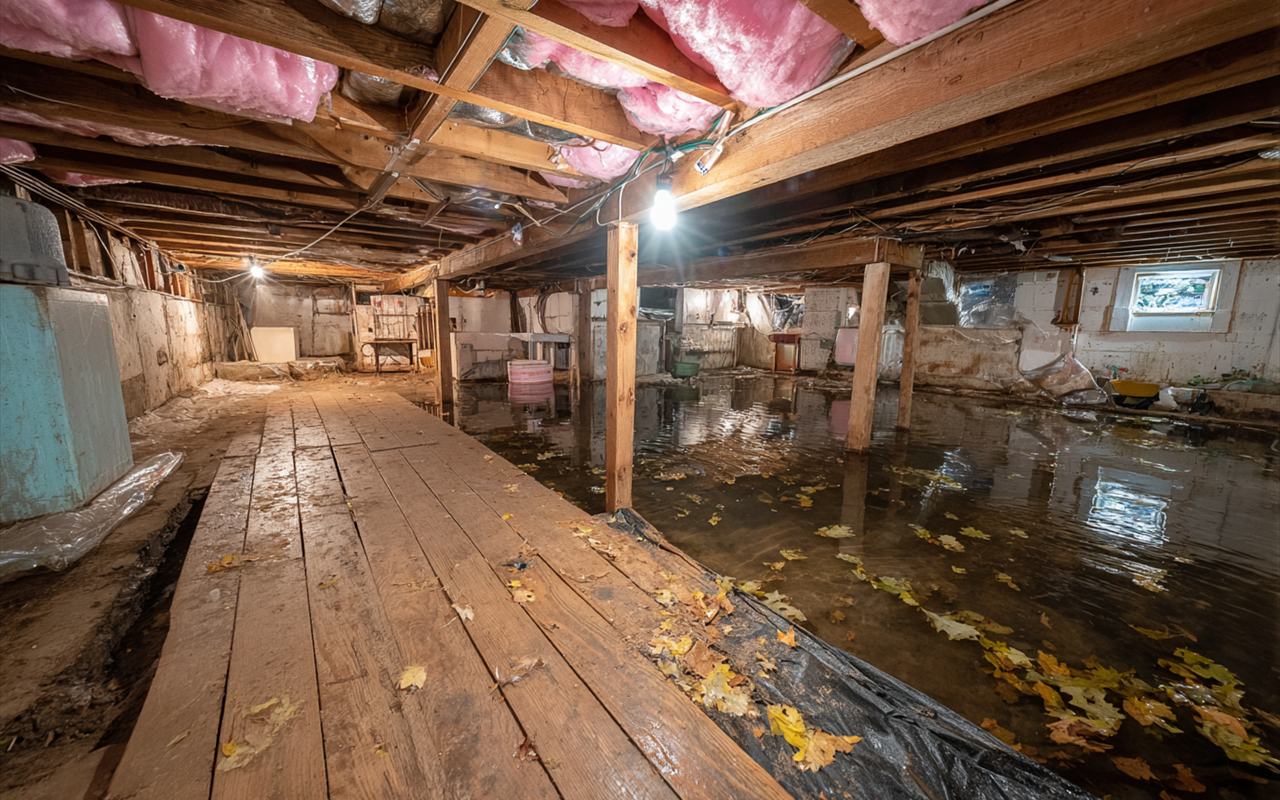
Ask a restoration company what it wants to know first about a leak, and after "is it still running?" the next question is usually "what's under the floor?" The answer changes where the water goes, where it hides and how the drying gets set up. Around Meridian you'll find all three foundation types, often on the same street.
How to Tell Which You Have
- Crawlspace: look for a hatch in a closet floor, a hallway, the garage wall or outside along the foundation, and small vents along the foundation wall outside. The floor feels slightly springy compared with concrete.
- Basement: stairs going down, or below-grade windows with window wells outside.
- Slab: no hatch, no stairs, no vents. The floor feels solid and cool, and the house sits low to the ground.
Listings and county property records often note the foundation type too. In the Treasure Valley, crawlspaces show up under houses of every age, from mid-century homes to new construction.
Crawlspace Homes
How it's built: the house sits on a short foundation wall, with wood joists and a plywood or OSB subfloor spanning across. Below the floor is an open space, usually a couple of feet high, with insulation between the joists and a plastic vapor barrier over the dirt.
Where water goes: down. Water that gets through a floor covering soaks the subfloor, drips through the seams onto the insulation, and lands on the vapor barrier. Groundwater and outside water can come in from below or through the foundation vents.
Where it hides: in the insulation between the joists, on top of the vapor barrier, and in the sill plate where the wood sits on the foundation.
What drying looks like: wet insulation out, standing water pumped, air movers and a dehumidifier under the house, and readings on the joists and subfloor.
Slab Homes
How it's built: the house sits directly on a poured concrete slab, with the flooring on top.
Where water goes: sideways. With nowhere to sink, it spreads under the flooring and into the bottom of every wall it reaches.
Where it hides: under laminate, vinyl plank and carpet pad, and in the drywall and bottom plates along the walls.
What drying looks like: flooring lifted where needed, low cuts on wet walls, and drying aimed at the slab surface and the wall bottoms.
Basement Homes
How it's built: a full story below grade, with concrete or block walls and a slab floor. Some are finished with framed walls, drywall and carpet; some are bare. A daylight basement has one side open to the yard where the lot slopes.
Where water goes: to the lowest point, usually the base of the walls and the floor. It can come from above (a leak upstairs), from outside (window wells, wall seepage, a crack) or from below (groundwater).
Where it hides: behind finished walls against the concrete, under carpet pad, and inside framed walls along the bottom plate.
What drying looks like: pad out, the bottom of finished walls opened, insulation behind them pulled where wet, and drying with readings at the concrete and the framing.
Side by Side
| Crawlspace | Slab | Basement | |
|---|---|---|---|
| Direction water travels | Down | Sideways | To the lowest point |
| Biggest hiding place | Insulation and vapor barrier | Under flooring | Behind finished walls |
| Seasonal risk | Groundwater in irrigation season | Less affected by groundwater | Window wells in snowmelt; groundwater in summer |
| Freeze risk | Lines under the floor | Lines in walls and attic | Lines in exterior walls, sometimes fewer |
| What to say on the call | "It's a crawlspace house" and where the hatch is | "It's on a slab" | Finished or unfinished, and where the water came in |
Mixed Houses
Plenty of houses are a mix: a basement under part of the house and a crawlspace under the rest, or a slab garage attached to a crawlspace house. Water can cross from one to the other. If you're not sure, tell the company what you do know, and they'll check the rest on the first visit.
Questions
Which type is most common around Meridian?
You'll find all three. Crawlspaces are common under homes of every age in the valley, basements show up more in custom homes, older homes and parts of Eagle and Boise, and slabs in some newer and smaller homes.
Does a crawlspace house always need someone to go underneath?
For most leaks that reach the floor, yes. The water rarely stops at the subfloor.
Is one type better for water damage?
Each has its weak spot. What matters most is knowing which one you have and where it hides water.
Around Meridian
Crawlspace homes fill neighborhoods like BridgeTower, older basements show up near Downtown Meridian, and acreage homes in Southwest Boise mix all three. The drying side is covered on crawlspaces and basements.
Canal Seepage and Summer Groundwater: Why Crawlspaces Get Wet in July
Where the valley's groundwater comes from, and why it peaks in summer.
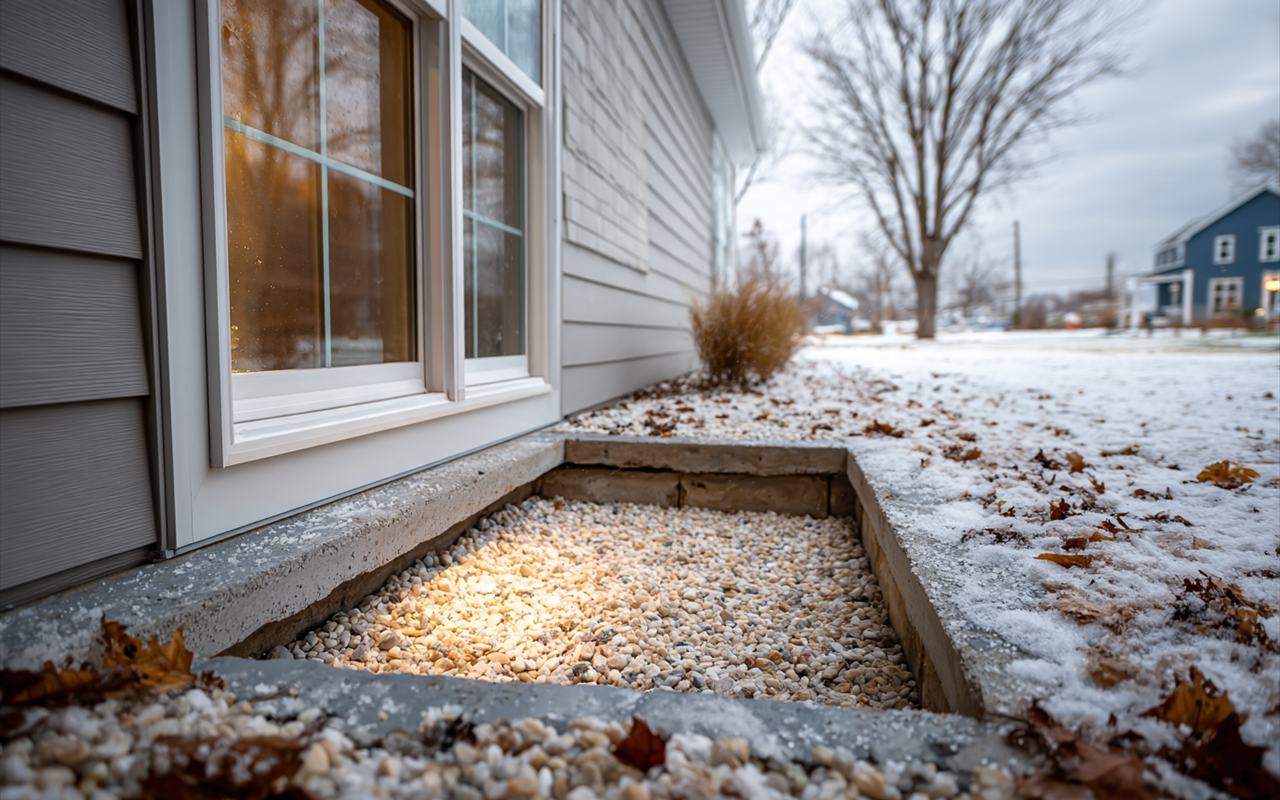
Window Wells and Egress Windows in Newer Basements
Why a basement window is the low point for snowmelt and sprinklers.
Hot Tubs, Pools and Backyard Water Close to the House
When backyard water ends up under the floor.